





UPS vs Inverter: Choosing the Right Backup Power System
- Understanding backup power needs
- What users usually mean by backup power
- Key performance metrics that drive selection
- Semantic context: the role of ups power inverter in searches
- Technical differences: UPS vs inverter
- Basic functional distinction
- Response time and topology
- Waveform and load compatibility
- Practical comparison: features, use-cases and costs
- Side-by-side feature comparison
- Use-case scenarios and recommendations
- Cost and lifecycle considerations
- Selection guide: how to choose the right system
- Step 1 — Identify critical loads and ride-through requirements
- Step 2 — Check waveform and surge requirements
- Step 3 — Decide runtime and battery type
- Step 4 — Confirm certifications and reliability measures
- Manufacturer spotlight: Guangzhou Congsin — capabilities and products
- Company overview and track record
- Production, certifications and innovation
- Product strengths and competitive differentiators
- Decision checklist and deployment tips
- Short checklist before purchase
- Installation and maintenance tips
- When to consult an expert
- FAQ — Common questions about UPS and inverters
- 1. Can an inverter replace a UPS for my server?
- 2. What's the difference between modified sine and pure sine inverters?
- 3. How long will a UPS or inverter run on battery?
- 4. Are lithium batteries better than lead-acid for inverters?
- 5. Do I need surge protection if I use a UPS?
- 6. How do certifications affect my purchasing decision?
- Contact and next steps
- References
Choosing between a UPS and a power inverter is a common decision for homes, small businesses, telecom, medical and industrial users seeking reliable backup power. This article defines core technical differences, compares performance, costs and maintenance, and provides practical selection criteria based on load type, required uptime, waveform sensitivity and budget. It embeds verified references so facility managers, installers and buyers can make evidence-based choices for UPS power inverter solutions.
Understanding backup power needs
What users usually mean by backup power
Backup power can mean short-duration protection to ride through brief disturbances (seconds) or full standby power for extended outages (hours). Typical needs include: preserving critical data and IT systems, keeping medical devices operational, lighting and safety loads in buildings, and enabling off-grid or mobile power for vehicles, RVs and outdoor work.
Key performance metrics that drive selection
- Transfer/response time — how fast the backup source engages when utility power fails.
- Waveform quality — whether sensitive electronics require pure sine output or can tolerate modified/stepped waveforms.
- Runtime and battery type — how long the system must run and whether lead-acid, AGM, gel or lithium is used.
- Power rating and surge capacity — continuous watts and peak (inrush) capability to start motors or compressors.
- Efficiency, maintenance needs, certifications and cost.
Semantic context: the role of ups power inverter in searches
Users searching for ups power inverter often compare instantaneous protection (UPS) to longer-term inverter-based backup or off-grid inverters. This article addresses both meanings: uninterruptible power supplies (UPS systems) and standalone DC→AC inverters used with batteries and charge controllers.
Technical differences: UPS vs inverter
Basic functional distinction
An uninterruptible power supply (UPS) is designed primarily to provide instantaneous power continuity and power conditioning for critical loads. A power inverter converts DC battery voltage to AC and is commonly used where inverter-based systems switch over to battery power after an outage. For definitions and fundamentals, see Uninterruptible power supply (Wikipedia) and Inverter (electrical) (Wikipedia).
Response time and topology
Response time is a primary differentiator:
- Online (double-conversion) UPS: zero transfer time — load always powered from inverter fed by rectifier and battery; best for critical systems.
- Line-interactive UPS: typically switches within a few milliseconds (1–10 ms) and provides some conditioning.
- Off-line/standby UPS: transfers in 4–12 ms and is common for desktops.
- Typical inverter + transfer switch: transfer can be noticeable (10–100 ms) depending on design; best for non-mission-critical loads or where devices tolerate brief interruption.
Reference: the UPS Wikipedia entry includes topology and transfer-time descriptions: https://en.wikipedia.org/wiki/Uninterruptible_power_supply.
Waveform and load compatibility
Waveform matters for sensitive electronics and motors:
- Pure sine wave output matches utility AC and is required for high-end electronics, variable-frequency drives and many modern power supplies.
- Modified sine wave or stepped approximations (common in lower-cost inverters) may cause overheating, noise, inefficient motor operation or failure for some devices.
When searching ups power inverter users want to know if an inverter can truly replace a UPS for servers and sensitive gear — the short answer: only a UPS or inverter with true pure sine and appropriate transfer topology will reliably protect mission-critical equipment.
Practical comparison: features, use-cases and costs
Side-by-side feature comparison
| Feature | UPS (typical) | Power Inverter (typical) |
|---|---|---|
| Primary purpose | Instantaneous backup, power conditioning | DC→AC conversion for sustained backup or off-grid use |
| Response/transfer time | 0 ms (online) to ~10 ms (standby/line-interactive) | 10–100 ms (depends on switch and design) |
| Typical waveform | Pure sine (most quality UPSs) | Pure sine (High Quality) or modified sine (budget) |
| Best use-cases | Servers, telecom, medical, point-of-sale, critical control systems | Off-grid homes, RVs, vehicles, long-duration backup |
| Runtime | Short (minutes) unless paired with external battery banks | Hours to days with sufficient battery capacity |
| Cost (system) | Higher per kW for pure UPS functionality | Lower per kW but batteries and transfer hardware add cost |
| Typical certifications | CE, EMC, LVD, UL/ETL for many models | CE, EMC, LVD, ETL/FCC for many models |
Use-case scenarios and recommendations
- Data centers / servers: prefer UPS (online or high-quality line-interactive) to eliminate transfer delay and provide power conditioning.
- Home office and desktops: line-interactive or standby UPS where short ride-through is adequate.
- Off-grid cabins, RVs, vehicles: dedicated inverters with appropriately sized battery banks and solar charge controllers.
- Mixed needs (critical control + longer runtime): combine UPS for immediate protection and inverter-battery bank for extended outages.
Cost and lifecycle considerations
UPS systems often have higher initial cost per kW but are optimized for reliability and serviceability (hot-swappable batteries, redundancy). Inverter-based systems shift cost to battery capacity for runtime and to solar/charging components if off-grid. Battery chemistry (lead-acid vs. Li-ion) will influence lifecycle cost, depth-of-discharge and maintenance. For general battery basics, see the U.S. Department of Energy explanation: Energy.gov - Battery Basics.
Selection guide: how to choose the right system
Step 1 — Identify critical loads and ride-through requirements
List devices that must not interrupt (servers, medical equipment), those that can tolerate short interruptions, and non-critical loads. Determine the required ride-through time. If loads require uninterrupted power (no transfer gap), an online UPS or UPS+inverter hybrid is necessary.
Step 2 — Check waveform and surge requirements
Verify if equipment needs a pure sine waveform and has high inrush current (motors, compressors). Select a unit rated for surge start-up power (peak watts) not just continuous watts.
Step 3 — Decide runtime and battery type
Estimate required runtime and choose battery chemistry accordingly. For long-duration outages, lithium batteries provide higher cycle life and energy density; sealed lead-acid remains cost-effective for shorter runtimes but requires replacement more frequently. Consider charger capacity and solar integration if applicable.
Step 4 — Confirm certifications and reliability measures
Choose products with recognized quality systems and safety approvals (ISO9001 quality management, CE, EMC, LVD, ETL/FCC). For standard references on ISO 9001: ISO - Quality Management.
Manufacturer spotlight: Guangzhou Congsin — capabilities and products
Company overview and track record
Guangzhou Congsin Electronic Technology Co., Ltd., founded in early 1998, is a professional power inverter manufacturer with over 27 years of focused experience. We design, R&D and manufacture a wide range of power solutions—with a core emphasis on DC→AC power inverters, portable power stations, and solar charge controllers. Our catalog includes 100+ models tailored for vehicles, solar systems, RVs and trucks, off-grid homes, outdoor offices, patrol and field construction work.
Production, certifications and innovation
Congsin operates fully automated production lines, advanced instrumentation and multifunctional testing equipment to ensure product reliability, efficiency and intelligent functionality. Environmental and safety compliance are built in: our quality system is ISO9001 certified and many products hold international approvals such as CE, EMC, LVD, ETL, FCC, RoHS and E-MARK. Several independently developed patents further demonstrate our commitment to innovation.
Product strengths and competitive differentiators
Core product strengths include a broad range of pure sine wave inverter models, modified sine wave inverter options for cost-sensitive applications, solar charge controllers and portable power stations. Congsin emphasizes OEM/ODM flexibility, private labeling and bespoke customization for global partners. Their offerings are designed to cover applications from vehicle-mounted solutions to off-grid home installations, making them a practical partner when evaluating UPS power inverter strategies for varied markets.
Decision checklist and deployment tips
Short checklist before purchase
- Have you inventoried critical vs non-critical loads and measured inrush? (use clamp meter during start-up)
- Do you need continuous conditioning (online UPS) or simply ride-through (inverter/line-interactive)?
- Is pure sine output mandatory for your equipment?
- What runtime do you require and what battery chemistry will meet lifecycle targets?
- Have you budgeted for maintenance, battery replacement and cooling requirements?
Installation and maintenance tips
- Place batteries in a ventilated, temperature-controlled area and follow manufacturer installation guides.
- Schedule periodic battery tests and replace batteries based on measured capacity, not just age.
- Use surge protection and proper grounding to extend equipment life.
- For mixed criticality, consider hybrid systems combining a UPS for immediate protection and an inverter-battery bank for extended outages.
When to consult an expert
If you manage a multi-server rack, medical equipment, or industrial control systems where downtime has high cost or safety implications, involve an experienced electrical engineer or a specialized vendor early to size systems, design redundancy and ensure compliance with local regulations.
FAQ — Common questions about UPS and inverters
1. Can an inverter replace a UPS for my server?
Generally no. Servers and critical network gear often require zero transfer time and stable pure sine power — an online UPS is recommended. If an inverter system includes an online transfer topology or is combined with a UPS that supplies immediate power until the inverter takes full load, it may be acceptable.
2. What's the difference between modified sine and pure sine inverters?
Pure sine provides a smooth AC waveform identical to utility power and is required for sensitive electronics, variable-speed motors and audio equipment. Modified sine is a stepped approximation and can cause heating, noise or reduced efficiency for some devices.
3. How long will a UPS or inverter run on battery?
Runtime depends on battery capacity (Ah), system voltage and load. A rule of thumb: runtime (hours) = battery amp-hours × battery voltage / load (watts), adjusted for inverter efficiency. For accurate sizing, calculate using measured load and required autonomy, and consult manufacturer runtime tables.
4. Are lithium batteries better than lead-acid for inverters?
Lithium batteries offer higher energy density, longer cycle life and deeper discharge capability but at higher upfront cost. Lead-acid is cheaper initially but heavier, bulkier, and typically requires more frequent replacement. Choose based on total cost of ownership, weight/space constraints and application.
5. Do I need surge protection if I use a UPS?
Yes. While many UPS units include surge suppression and filtering, site-level surge protection (SPD) at service entrance and distribution panels provides an additional layer of defense against large transients from lightning or utility switching.
6. How do certifications affect my purchasing decision?
Certifications such as ISO9001, CE, EMC, LVD and ETL/FCC indicate that products meet quality, safety and electromagnetic compatibility standards in target markets. For exports and critical installations, choose products with recognized approvals to simplify compliance and warranty support.
Contact and next steps
If you need tailored advice, capacity planning or product recommendations for UPS power inverter applications, contact Guangzhou Congsin Electronic Technology Co., Ltd. We offer OEM/ODM services, private labeling and customization to meet your specifications. Explore product lines including Solar Charge Controllers, modified sine wave inverters, pure sine wave inverters and portable power stations, or request a technical consultation to size and configure the right backup power system for your requirements.
Visit Congsin product pages or contact sales for quotes and technical datasheets.
References
Top 10 bidirectional battery inverter Manufacturers and Supplier Brands
Top 5 solar cell Company List and Products Compared
High Frequency Inverter Buying Guide for Industrial Applications
Safety Standards and Certifications for UPS Inverters
Modified Sine Wave Inverters
Can it be used in electric vehicles?
Most electric vehicles have a high-voltage system, and this inverter inputs DC 12V. It is not recommended to use it directly. If you need to use it, please confirm whether the vehicle power output matches first.
Which regional plugs are supported by the universal socket?
The universal socket is compatible with most national plug specifications, such as GB, US, EU, etc. (some require adapters), and can meet the use of devices in different regions.
Can 4 USB ports charge 4 mobile phones at the same time?
Yes, the total current of 6.8A can support simultaneous fast charging of multiple devices, and the charging efficiency is guaranteed.
Is the cooling fan noisy?
The fan is designed for heat dissipation and will make some noise during operation, but it is within a reasonable range and will not interfere with normal use.
What is the working principle of the UPS function?
When the external power supply is normal, the inverter powers the device and charges the battery; when the external power supply is interrupted, it automatically switches to battery power to ensure uninterrupted operation of the device.
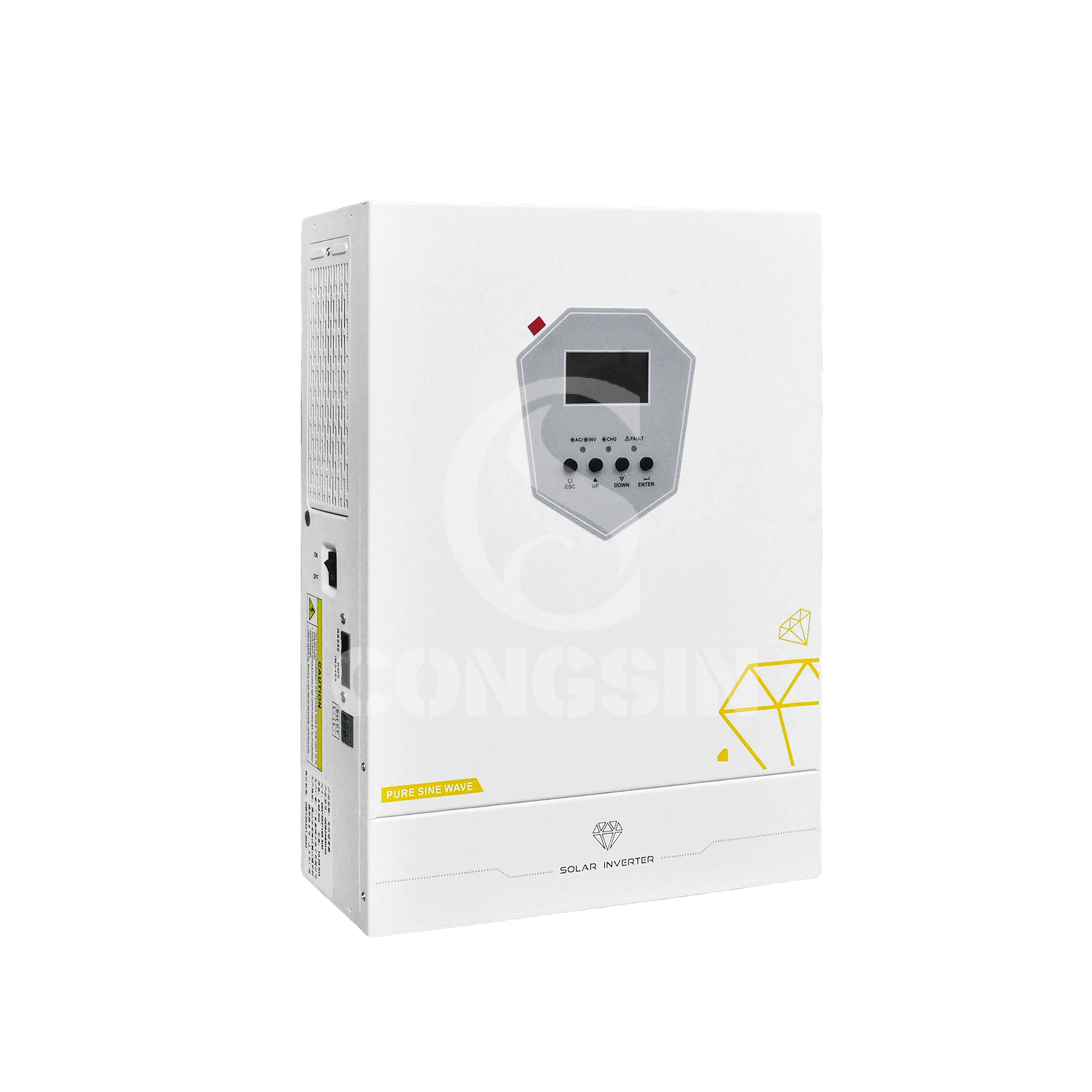
Factory Direct Sales 6000W Hybrid Solar Power Inverter with Controller and LCD Display
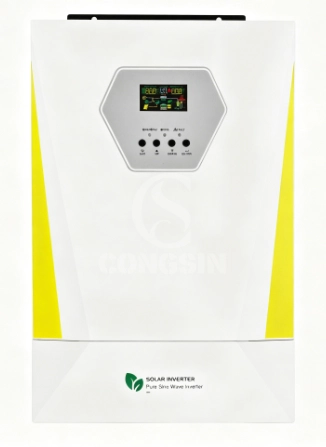
Congsin 4000W and 6000W Hybrid Inverter with Controller with LCD Display and CE Certification Solar
Power your solar system efficiently with the Congsin 4000W and 6000W Hybrid Inverter. Featuring an integrated MPPT Controller, this CE Certified inverter ensures optimal energy conversion. Monitor performance effortlessly via the intuitive LCD Display. Reliable, powerful, and ready for your sustainable energy needs.
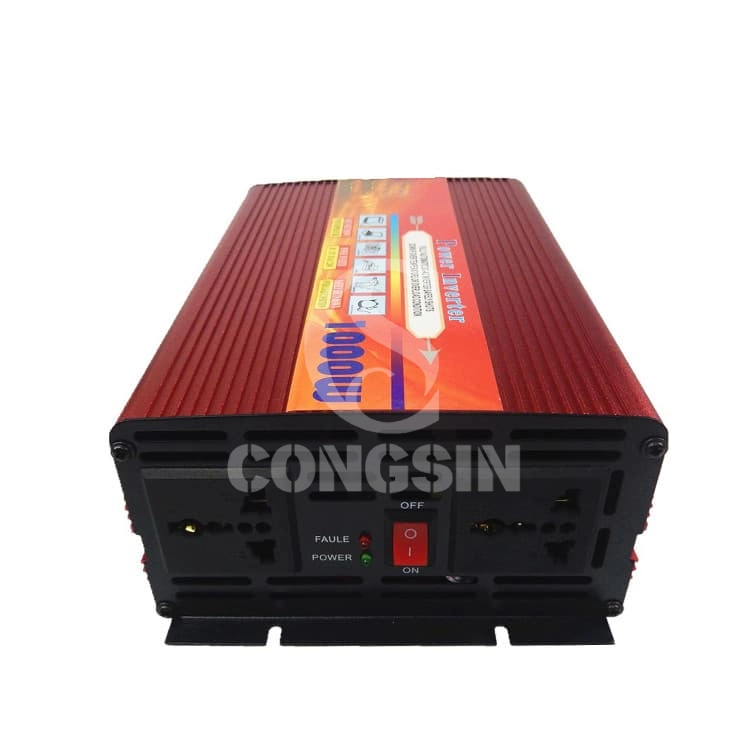
Congsin Manufacturer Wholesales Big Capability Modified Sine Wave Inverter with Red case and Double fan
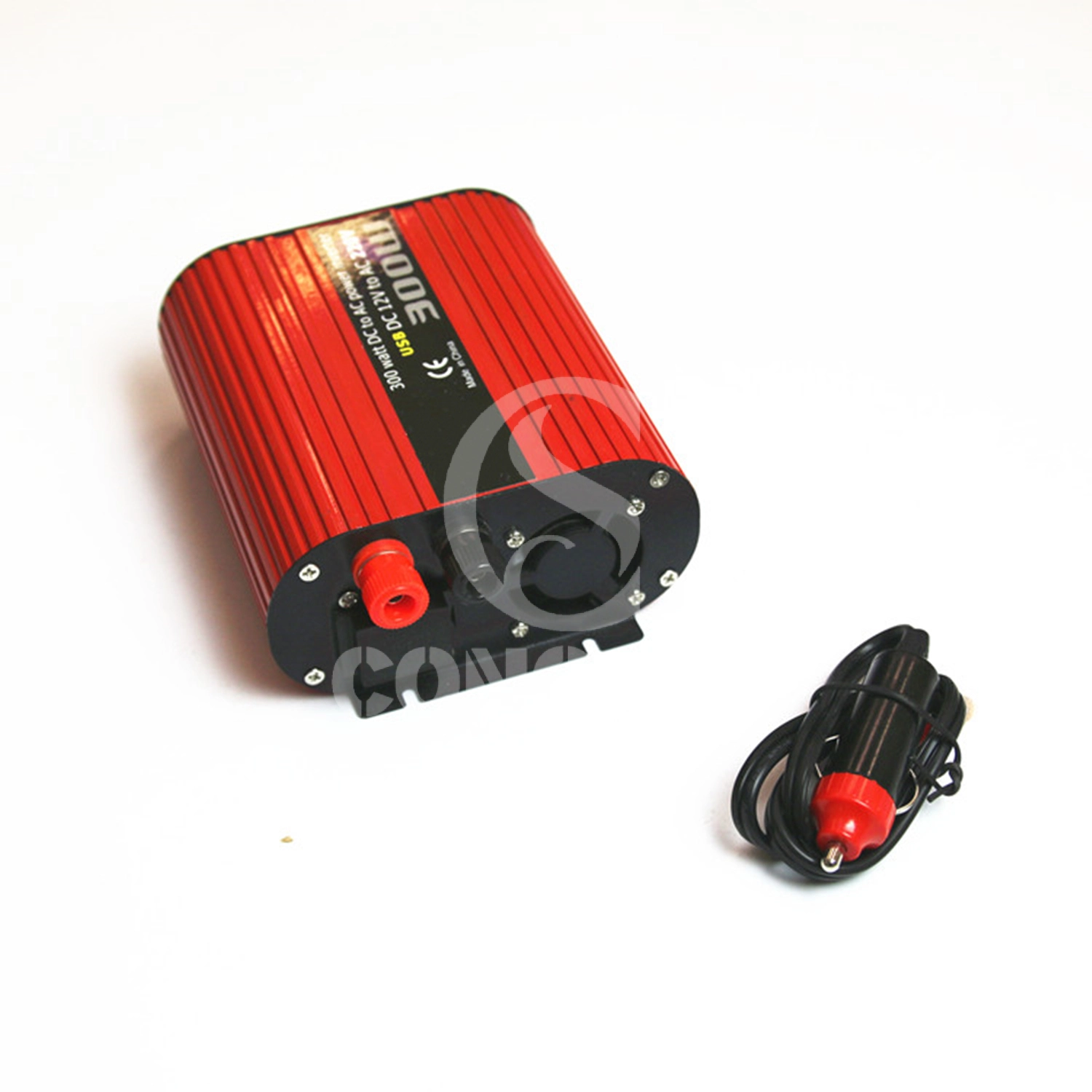
Factory Direct Sales Portable 150W Modified Sine Wave Inverter DC12V to AC220V Off-grid Sine Wave Inverter with Two USB and Universal Socket
Congsin's Portable 150W Modified Sine Wave Inverter powers your journey! This versatile Car Power Inverter with USB acts as a reliable 12V to 220V converter, ensuring an essential off-grid power supply. With dual USB ports and a universal socket, enjoy convenient power on the go.

CONGSIN is a trusted OEM factory for power inverters, solar charge controllers, and DC converters. Reliable solutions for global B2B buyers.
 High Quality
 7/24 Service
 Guaranteed Warranty
© 2025 Congsin. All Rights Reserved.
 WeChat
 Scan QR Code
sin cong
teaimei10
Whatsapp: +8618028086791
Scan QR Code